
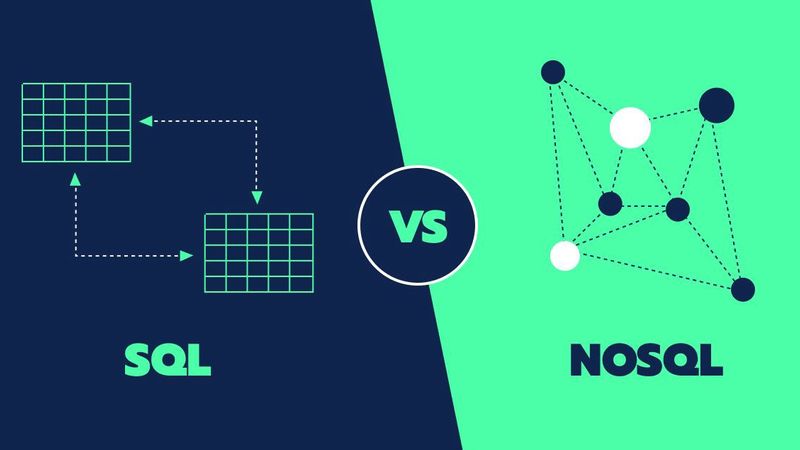
Databases are the backbone of modern software applications, serving as repositories for vast amounts of data. When choosing a database system, one of the most critical decisions you’ll face is whether to go with a traditional SQL (Structured Query Language) database or opt for a NoSQL (Not Only SQL) database. This choice has profound implications for your application’s performance, scalability, and data management capabilities.
In this comprehensive guide, we will delve into the world of databases, comparing SQL and NoSQL databases in various aspects. We’ll explore their different use cases, ideal scenarios for each, and discuss which one might be better suited for specific situations. By the end, you should have a clear understanding of when to choose SQL or NoSQL databases for your projects.
Understanding SQL Databases
SQL databases, also known as relational databases, have been the industry standard for decades. They are characterized by their structured and tabular data model, which uses tables with predefined schemas to organize and store data. Some well-known SQL database systems include MySQL, PostgreSQL, Microsoft SQL Server, and Oracle Database.
Strengths of SQL Databases
SQL databases come with several strengths that make them suitable for specific use cases:
-
Data Integrity: SQL databases enforce data integrity through rigid schemas, foreign key constraints, and referential integrity. This means that the data is well-structured, and any anomalies are prevented.
-
Structured Data: SQL databases are ideal for structured data with well-defined relationships. If your data has clear relationships between entities, SQL databases make it easy to represent and query such data.
-
ACID Compliance: They provide strong transactional support, ensuring data consistency. ACID (Atomicity, Consistency, Isolation, Durability) properties guarantee that transactions are reliable and predictable.
-
Complex Queries: SQL databases are designed for complex queries involving multiple joins, aggregations, and filtering. This makes them suitable for applications requiring sophisticated data analysis.
-
Reliable and Mature: SQL databases have a long history of reliable performance and a mature ecosystem with robust tooling and support. They are trusted by enterprises for mission-critical applications.
Weaknesses of SQL Databases
While SQL databases offer many advantages, they also have some limitations:
-
Scaling Challenges: Vertical scaling (upgrading server resources) can only take SQL databases so far. Scaling horizontally (adding more servers or nodes) can be complex and costly.
-
Schema Changes: Modifying the database schema can be challenging in SQL databases, especially in large, production systems. Changes often require careful planning and migration.
-
Not Ideal for Unstructured Data: SQL databases are not well-suited for handling unstructured or semi-structured data, such as JSON or XML.
-
Higher Overhead: ACID transactions, while ensuring data integrity, come with a performance overhead. For read-heavy workloads, this overhead may be unnecessary.
The World of NoSQL Databases
NoSQL databases emerged as a response to the limitations of SQL databases in handling unstructured or semi-structured data and achieving horizontal scalability. NoSQL databases are more flexible, schema-less, and cater to a variety of data models, including document, key-value, column-family, and graph databases. Some well-known NoSQL databases include MongoDB, Cassandra, Redis, Couchbase, and Neo4j.
Strengths of NoSQL Databases
NoSQL databases offer a range of strengths that make them valuable in specific scenarios:
-
Schema Flexibility: NoSQL databases are schema-less or schema-flexible, allowing developers to adapt to changing data requirements easily. This flexibility is crucial in agile development environments.
-
Horizontal Scalability: They can scale horizontally by adding more servers or nodes, making them well-suited for handling high volumes of traffic. Scaling out is often simpler and more cost-effective than vertical scaling.
-
Fast Writes: Many NoSQL databases are optimized for write-heavy workloads, making them suitable for real-time applications like social media feeds, IoT data, and event sourcing systems.
-
Variety of Data Models: NoSQL databases support multiple data models, catering to diverse use cases. Whether you need to store documents, key-value pairs, or graph data, there’s a NoSQL database for the job.
-
Flexibility in Data Modeling: Developers can choose the most appropriate data model (document, key-value, etc.) for their specific application needs. This adaptability simplifies development.
Weaknesses of NoSQL Databases
NoSQL databases, while powerful, also have their limitations:
-
Lack of ACID Transactions: Most NoSQL databases do not provide ACID transactions out of the box. While this can improve write performance, it may lead to data consistency challenges in certain scenarios.
-
Limited Complex Queries: NoSQL databases are generally not as proficient as SQL databases in handling complex queries that involve multiple joins and aggregations. Analytics and reporting may require additional effort.
-
Data Redundancy: Some NoSQL databases may require data duplication to optimize for read-heavy workloads. While this can improve read performance, it increases storage requirements.
-
Learning Curve: The diversity of NoSQL databases and their varying data models can result in a steeper learning curve for developers. Choosing the right NoSQL database for a specific use case requires careful consideration.
-
Less Mature Ecosystem: While NoSQL databases have evolved rapidly, the ecosystem is not as mature as that of SQL databases. You may encounter limitations in tooling and support.
When to Choose SQL vs. NoSQL: Key Considerations
The decision between SQL and NoSQL databases should be driven by your specific project requirements. Here are some key considerations to help you make an informed choice:
Choose SQL Databases When:
-
Data Consistency is Crucial: If your application deals with financial transactions, healthcare records, or any scenario where data consistency is paramount, SQL databases with ACID properties are your best bet.
-
Structured Data is Dominant: When your data is primarily structured and relies on complex relationships between entities, SQL databases with predefined schemas make sense.
-
Complex Queries are Required: If your application demands complex querying involving multiple joins, aggregations, and data transformations, SQL databases offer robust query capabilities.
-
Vertical Scalability is Adequate: SQL databases can handle vertical scalability (upgrading server resources) well, and this might be sufficient for your scalability needs.
-
Maturity and Reliability Matter: If you prioritize a mature and reliable database ecosystem with well-established best practices and tooling, SQL databases are a solid choice.
Choose NoSQL Databases When:
-
Scalability and Performance are Critical: For applications that require horizontal scalability to handle growing workloads, NoSQL databases shine due to their ability to distribute data across multiple nodes.
-
Flexibility is Key: When your data structure is dynamic and changes frequently, NoSQL databases’ schema flexibility allows you to adapt without hassle.
-
High Write Throughput is Needed: If your application involves high write throughput, such as real-time analytics or IoT data ingestion, NoSQL databases can handle these workloads efficiently.
-
Variety of Data Models is Required: NoSQL databases offer various data models, so if your application involves diverse data types, choosing the appropriate data model can simplify development.
-
Startups and Rapid Prototyping: NoSQL databases are often favored by
startups and projects requiring rapid prototyping due to their flexibility and ease of development.
Consider Hybrid Approaches
In some cases, a hybrid approach may be the best solution. This involves using both SQL and NoSQL databases within the same application to capitalize on their respective strengths. For example, you might use a SQL database for handling core transactional data while employing a NoSQL database for storing and serving user-generated content.
Real-World Scenarios: SQL vs. NoSQL
Let’s explore real-world scenarios where the choice between SQL and NoSQL databases becomes critical:
Scenario 1: E-commerce Platform
Imagine you’re building a large-scale e-commerce platform. Your database will need to handle a massive catalog of products, millions of user accounts, and real-time order processing. In this case:
-
SQL Database: You might opt for a SQL database to ensure data consistency in financial transactions, manage complex product relationships, and support comprehensive reporting and analytics.
-
NoSQL Database: You could use a NoSQL database for handling user profiles, session management, and serving product listings. NoSQL’s horizontal scalability can accommodate user-generated content and high traffic.
Scenario 2: Social Media Application
Suppose you’re developing a social media application with user-generated content, real-time feeds, and personalized recommendations. Here’s how the database choice might play out:
-
SQL Database: You may use a SQL database for managing user accounts, privacy settings, and maintaining the integrity of user data. Complex querying capabilities can help generate personalized content and recommendations.
-
NoSQL Database: For real-time feeds, posts, comments, and notifications, a NoSQL database can provide low-latency data retrieval and handle high write throughput. Graph databases might be used for modeling user connections.
Scenario 3: Internet of Things (IoT) Platform
In an IoT platform, sensor data from countless devices needs to be ingested, stored, and analyzed in real-time. Here’s how the choice might look:
-
NoSQL Database: NoSQL databases are often the preferred choice due to their ability to handle high volumes of time-series data, sensor readings, and device telemetry. They can provide fast writes and scalable storage.
-
SQL Database: While SQL databases can handle IoT data, NoSQL databases are typically better suited for the rapid ingestion and real-time analysis of sensor data.
Scenario 4: Content Management System (CMS)
If you’re building a content management system for a news website, you’ll have a mix of structured content (articles, categories) and unstructured content (images, videos, user-generated comments):
-
SQL Database: You might use a SQL database for managing structured content, articles, and categories. The relational model is well-suited for structured data.
-
NoSQL Database: Unstructured content like images and videos could be stored in a NoSQL database for efficient retrieval and delivery. Additionally, user-generated comments and interactions can benefit from NoSQL’s flexibility.
Conclusion
The choice between SQL and NoSQL databases is not a one-size-fits-all decision. Your selection should align with your project’s specific requirements, including data structure, scalability needs, and query complexity. SQL databases offer strong data consistency and are well-suited for structured data, while NoSQL databases provide flexibility, scalability, and versatility for various data models.
Ultimately, the success of your database choice relies on understanding your application’s unique demands and selecting the database technology that best supports those needs. Keep in mind that the boundaries between SQL and NoSQL databases are becoming increasingly blurred, with some databases offering hybrid capabilities, further expanding your options in the ever-evolving database landscape.
In the end, whether you choose SQL or NoSQL, remember that both types of databases have their strengths and can be powerful tools when used appropriately. Consider the specifics of your project and the unique challenges it presents to make the best-informed choice for your database solution.
Sources
Image: Medium.com
Comments

About Blake Maxwell